About    Construction    FAQ    History
Frequently Asked Questions


What is a longhouse?

Longhouses were long, narrow, single-room buildings constructed by Native People in North America and by other groups around the world. Longhouses varied in size and style depending on when, where and by whom they were built. In the eastern part of the United States and Canada, they often had curved walls and a roof made of tree bark stretched on a framework of bent saplings, all supported by log posts and beams. Multiple families lived together in each house. Archeological digs in places like Washington Boro in Lancaster County, Pennsylvania, show evidence of thousands of people living together in towns filled with longhouses—many more than 100 feet long. Longhouses were typical housing for hundreds of years before Europeans arrived in North America, and would have been a familiar sight for early European settlers in Pennsylvania.


Why is a longhouse coming to the Hans Herr House?

The Herr family was part of the first group of Europeans to settle in Lancaster County. Inevitably, Native Americans were among their closest neighbors.

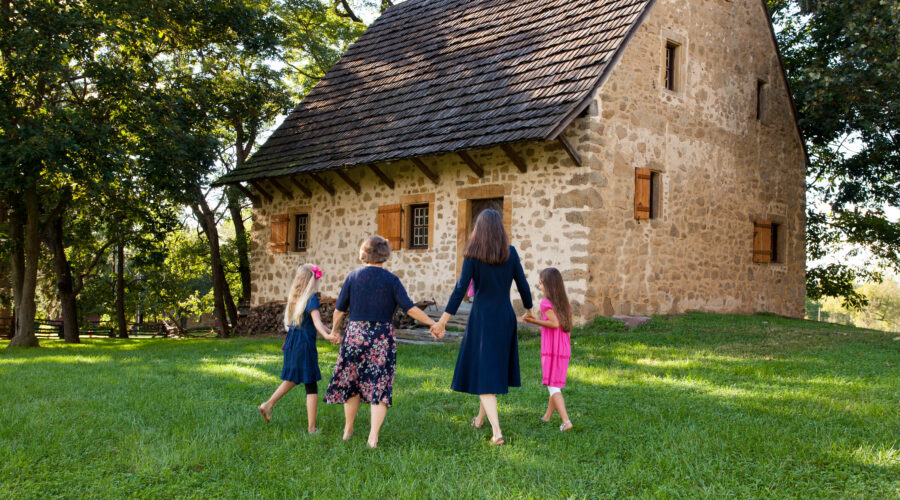
There is an old family story that Christian and Anna Herr, who built the 1719 Hans Herr House, woke up one winter morning to find some of their Native American neighbors in their kitchen. The night had been bitterly cold and they had come in to get warm by the fire. According to the story, Christian’s only objection was that the house smelled like bear grease (which some Native People used to weatherproof clothes or protect exposed skin).

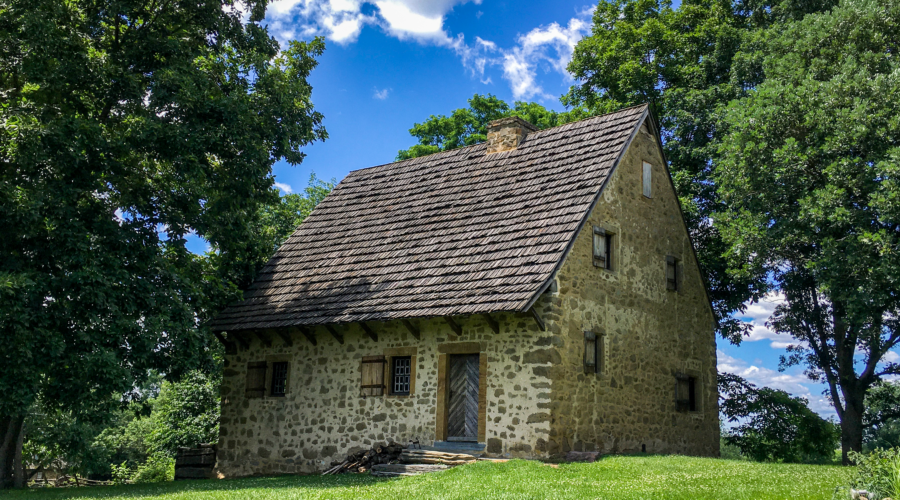
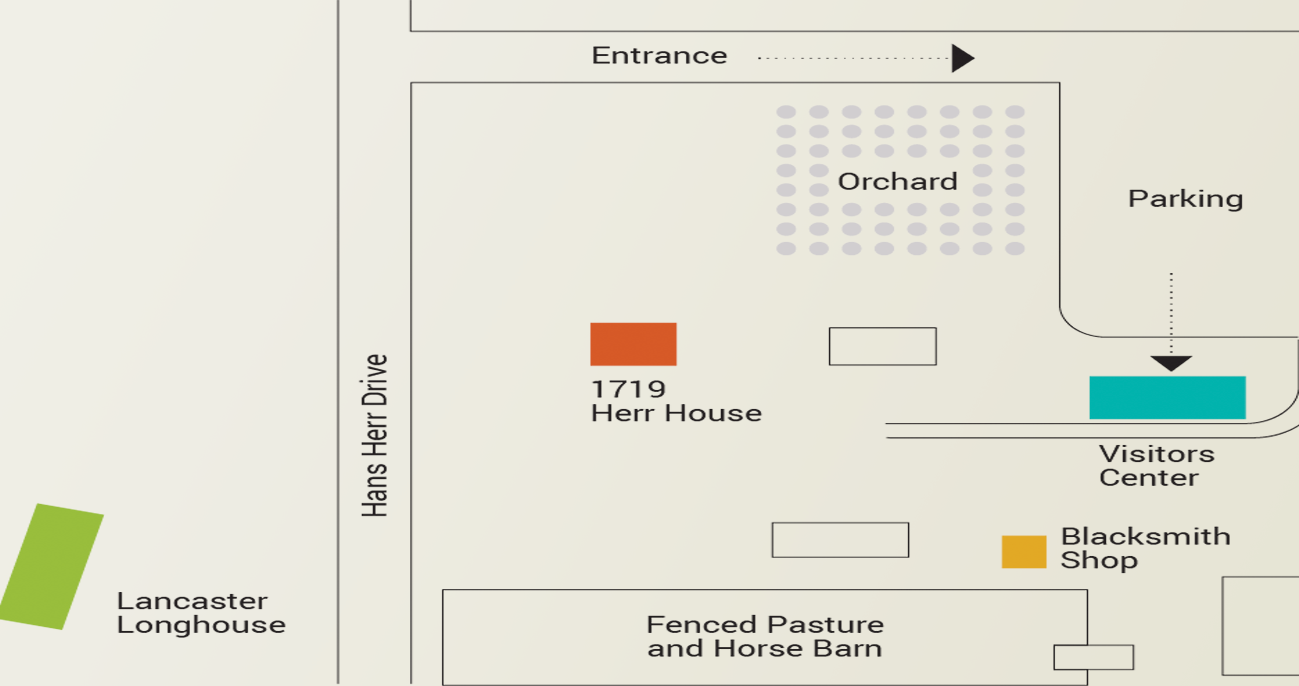
Three centuries years later, the 1719 Hans Herr House & Museum includes the oldest building in Lancaster County and two other homes built by descendents of the Herr family—but there are few reminders of the Native People who lived here for hundreds of years. Constructing a longhouse on the grounds of the 1719 Herr House enables the museum to tell the Lancaster County story from the 16th century to the turn of the 20th century.

The Longhouse is also a tangible expression of one community’s respect for another. At a service of honor and healing in Lancaster in 2010, Presbyterian, Mennonite and Quaker leaders and local and state officials recognized three hundred years of misunderstanding, neglect and abuse of Native Americans in Lancaster County.

Leaders recounted the infamous massacres of Conestoga Indians in Lancaster in 1763 and the establishment of the Carlisle Indian Industrial School nearby in 1879, as well as a series of insidious offenses: Europeans encroaching on Native land, poaching game, failing to aid Indians in need and imposing their cultural standards on Native groups.

“The fact that all of you would come here, assemble here, to say these things is what I would consider a legitimate act of contrition,” Curtis Zunigha (Delaware) said in response to the church and government statements. “I look forward to … joining you all in an effort to make great change so that we may never feel like this again.”

The Lancaster Longhouse is part of this community’s “effort to make great change” in the way we think and talk about the history of this land.


What tribe will the Lancaster Longhouse represent?

Longhouses varied in size and style depending on when, where and by whom they were built. Tribes with central Pennsylvania connections include the ancient “Shenks Ferry” civilization, the Conoy, Lenape (Delaware), Nanticoke, Shawnee and Susquehannock (including the Conestoga) people and Mohawk and Seneca groups (both part of the Iroquois Confederacy). The Lancaster Longhouse will not be modeled after any one group, but will recreate features common to Eastern Woodland Indian construction in the late 17th century.

The overall dimensions (20 ft. wide x 62 ft. long) are based on a Susquehannock longhouse that archeologist Barry C. Kent excavated in Washington Boro, Lancaster County in 1969.

Members or descendents of several Native American tribes—as well as local authorities such as archeologist Fred Kinsey and construction manager Ned Pelger—are serving as technical advisors for the project.

Sainte-Marie among the Hurons, Midland, Ontario
Ganondagan Longhouse, Victor, New York
Museum of Ojibwa Culture, St. Ignace, Michigan
Crawford Lake Iroquois Village, Milton, Ontario
Lancaster Longhouse sketch by Pat Kline

How will the Lancaster Longhouse be built?

Volunteers will be needed for many aspects of the project—from preparing saplings to providing furnishings. The framing and roofing will be handled by Native American volunteers and professional contractors.

Log posts and beams will form the interior supports. A lattice of bent saplings will arch over the interior structure to make a single curved roof and walls. Sheets of bark material will be lapped over the sapling frame like shingles. There will be a doorway at each end of the house and at least one fire pit and smoke hole in the center. Two wide shelves—supported by log posts on one side and the wall saplings on the other—will run the length of the longhouse on both sides of the room inside. (These shelves would have been used as both sleeping and storage areas.)

The Longhouse Project is committed to historical accuracy but builders will make several adjustments to improve the building's safety, durability and utility as an educational exhibit. For example, many Eastern Woodland longhouses were covered with elm tree bark. Large sections of bark would be peeled off standing trees and tied to the sapling framework. This method killed the tree. With respect for longevity, aesthetics and the environment, we will be using Flex-Bark, a high-quality synthetic material manufactured by Replications Unlimited (replicationsunlimited.com).


How will the Longhouse be furnished?

The longhouse will be furnished with reproductions of articles that would have been used by the multiple families who lived in each house. Reproductions will include clothing, pottery, baskets, gourds and tools used for hunting, cooking, food preservation and farming. Some of these items will be made by local Native American artisans and donated to the Lancaster Longhouse; others will be purchased.

The interior of the longhouse will be divided into two distinct parts representing Native American life before and after European contact. The pre-contact area will feature 16th through early 17th-century replica artifacts, such as distinctive clothing and pottery. The post-contact area will illustrate the lives of Native Americans from the mid-17th to mid-18th century. This area will include metal pots and European clothing, such as linen shirts and pants.

In 2011, Lancaster Mennonite Historical Society and the 1719 Hans Herr House acquired a collection of more than two hundred Native American tools and vessels connected to Lancaster County. After evaluation and cataloguing, a portion of this collection will be displayed in the Visitor’s Center at the museum. No original artifacts will be stored in the Longhouse.


What educational offerings will be available?

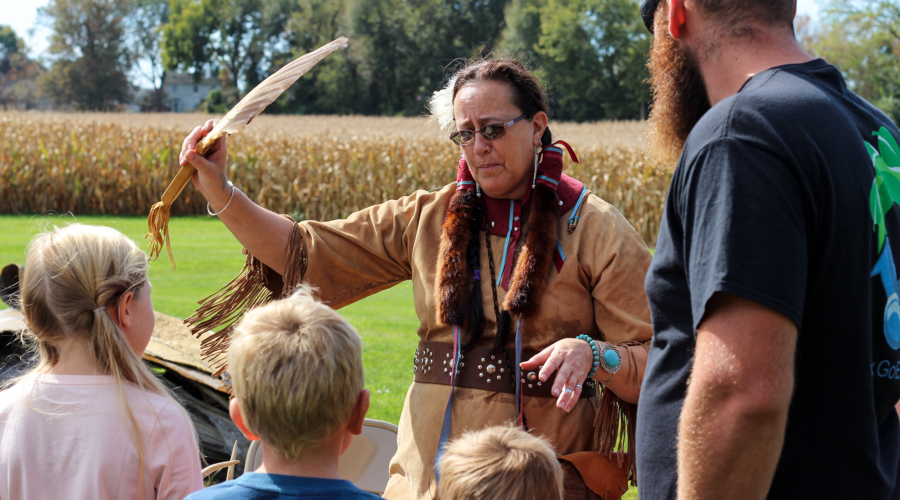
Native American artisans and educators will demonstrate the crafts, customs and life skills of 17th and 18th-century Native Americans at regular educational events held on the grounds.

June Heller, former teacher, principal and gifted program supervisor for the School District of Lancaster, is working with 1719 Herr House staff to draft a curriculum for elementary and secondary school students. This curriculum will meet current common core and academic standards and be available to teachers on the Longhouse website. It will include lesson plans with objectives, standard correlations, introductions to materials and procedures and activities that can be completed in the classroom before and after a visit to the Lancaster Longhouse.

Tours of the Longhouse will be incorporated into the current 1719 Hans Herr House & Museum tour offerings. With the help of local historians and Native Americans, a handbook will be written for tour guides. It will include a comprehensive outline of information on the Longhouse and Native American life, culture and customs, as well as a brief history of Native American tribes in Pennsylvania. This handbook will be used by both Native American and non-Native volunteer guides.


We invite you to give a meaningful gift to the Lancaster Longhouse and become part of this important initiative. Your gift will be matched as part of an early Leadership Challenge Fund. 

Basic longhouse structure
Flex-Bark by Replications Unlimited
Ruth Py (Lenape) weaves a reed mat at a 1719 Hans Herr House event.
In 2011, Lancaster Mennonite Historical Society and the 1719 Hans Herr House acquired a collection of more than two hundred Native American artifacts connected to Lancaster County.
Hans Herr House Museum
1849 Hans Herr Dr
Willow Street, PA 17584
Phone: (717) 464-4438
 Herr House   |  Longhouse   |  Site Map

Visitors Welcome
April 1 - November 30
Mon. - Sat., 9am - 4pm

Site Content Copyright © 2010 Hans Herr House |   | Web development by Ninja Fast.